Well, another month has come and gone. I thought that as I start a new month, I would give an update on my progress as of late.
Life - I moved to St. Louis, quite successfully I may add. So far it seems I have only forgotten my birth certificate (thanks for moving that, Mom) and a pair of shoes (which I hadn't actually missed) and I've only had to deal with one dent in the furniture from the move. All in all, the move itself went smoothly and I am loving my new apartment. We're still lacking a couch, but hopefully we will have that in the next few weeks.
Publishing - I had three separate people contact me from Openings, a literary magazine I have contributed to in the past, to submit a fiction piece for publication...after their announced deadline. I had very little notice for this, but I sent them a few options and should hear back on them shortly. I'm also hunting around for somewhere to submit my poetry and flash fiction, at least until I have a more sizable piece available.
Novel - Slow moving as of late, but still around. Mostly what I've been working on is planning and working with the timeline, since that tends to get a bit tricky with a time travel novel.
Short stories - I'm currently working on a piece regarding the day before the end of the world, which will be published in an anthology later this year. Once this project ends, a second one is beginning, which will likely be a straight-to-ebook free release, regarding travel between other worlds.
Writing groups - While I'm sad to have moved away from such an amazing writing group, I've been able to stay a part of Journey through the magic of the internet. In fact, I am currently heading a small group as part of Journey for those interested in working on finishing their novels, as opposed to writing or publishing them. Additionally, I'm on the hunt for a local group that I can meet in-person with, to have a more immediate support system.
Thursday, March 1, 2012

Thoughts from Chicago: Recycling
When I lived in Chicago, recycling was second nature. I had always considered Chicago a very green city, especially for being such a large, industrialized city, but I never fully comprehended just how eco-conscious Chicago was until I moved to St. Louis.
In Chicago, we had a recycling program combined with our trash pick-up at both my mother's and my father's houses, as well as in every school I had ever attended, and most businesses I frequented. Wal-Mart and Kohl's had recycling programs in store for plastic bags and Target had an amazing recycling center that accepted aluminum, paper, glass, and plastic. Recycling was everywhere. Now I'm actually having trouble recycling out of my own house. We don't have regular trash pick-up, just a dumpster, and we are not even offered the option of recycling. I attempted earlier this week to drop-off a box full of aluminum cans and a few glass bottles at a recycling center and despite what their website suggested, they were not very open to taking donations from the public. And they don't have any of the convenient drop-off locations in stores that I've become so accustomed to in Chicago.
 While I am frustrated by how little of St. Louis even considers green options (let's not get into the lack of public transport), this predicament only serves to endear me more to Chicago. One of my very favorite things about Chicago's high level of effort to support and sustain the environment were the trash bins downtown. I realize how ridiculous this sounds, but I am just so impressed by these smart bins that every time I walk downtown, I comment on them (much to the chagrin of my friends).
The "smart" bins (formally called "BigBelly Solar Compactors") are placed all around town, primarily in busier/touristy areas, such as Millennium Park and Grant Park. First, they collect trash like any other bin, but when it senses new trash, a compactor is triggered inside the bin which condenses the waste before it is shipped, so that the bin can accommodate more waste before a pick-up, which lessens the number of times a truck needs to drive across town, reducing the amount of fuel used, as well as the carbon released into the atmosphere. Additionally, the truck needs to make less trips because they do not work on a once or twice-a-week schedule, but rather on an as-needed basis. The bin--powered by solar rays, I might add--is smart enough to send a ping to the trash company when the bin is full, which is when the truck comes by for a pick-up. For a garbage can, it's pretty high tech stuff, but it positively impacts the environment—or at least decreases the negative impacts—in so many ways that it makes a noticeable difference. All because someone in Chicago looked at a trash bin on the street and thought "this could be a little greener."
And I think that's what's so great about Chicago, is that we make a conscious effort to be green. We place plants all over town and create laws about open spaces and gardens, even within the city limits, and we try to improve things wherever we can, even with something as simple as a trash bin on a street corner. It's something I have rarely seen or heard of outside of Chicago and it's something I already miss dearly.
In Chicago, we had a recycling program combined with our trash pick-up at both my mother's and my father's houses, as well as in every school I had ever attended, and most businesses I frequented. Wal-Mart and Kohl's had recycling programs in store for plastic bags and Target had an amazing recycling center that accepted aluminum, paper, glass, and plastic. Recycling was everywhere. Now I'm actually having trouble recycling out of my own house. We don't have regular trash pick-up, just a dumpster, and we are not even offered the option of recycling. I attempted earlier this week to drop-off a box full of aluminum cans and a few glass bottles at a recycling center and despite what their website suggested, they were not very open to taking donations from the public. And they don't have any of the convenient drop-off locations in stores that I've become so accustomed to in Chicago.
 While I am frustrated by how little of St. Louis even considers green options (let's not get into the lack of public transport), this predicament only serves to endear me more to Chicago. One of my very favorite things about Chicago's high level of effort to support and sustain the environment were the trash bins downtown. I realize how ridiculous this sounds, but I am just so impressed by these smart bins that every time I walk downtown, I comment on them (much to the chagrin of my friends).
The "smart" bins (formally called "BigBelly Solar Compactors") are placed all around town, primarily in busier/touristy areas, such as Millennium Park and Grant Park. First, they collect trash like any other bin, but when it senses new trash, a compactor is triggered inside the bin which condenses the waste before it is shipped, so that the bin can accommodate more waste before a pick-up, which lessens the number of times a truck needs to drive across town, reducing the amount of fuel used, as well as the carbon released into the atmosphere. Additionally, the truck needs to make less trips because they do not work on a once or twice-a-week schedule, but rather on an as-needed basis. The bin--powered by solar rays, I might add--is smart enough to send a ping to the trash company when the bin is full, which is when the truck comes by for a pick-up. For a garbage can, it's pretty high tech stuff, but it positively impacts the environment—or at least decreases the negative impacts—in so many ways that it makes a noticeable difference. All because someone in Chicago looked at a trash bin on the street and thought "this could be a little greener."
And I think that's what's so great about Chicago, is that we make a conscious effort to be green. We place plants all over town and create laws about open spaces and gardens, even within the city limits, and we try to improve things wherever we can, even with something as simple as a trash bin on a street corner. It's something I have rarely seen or heard of outside of Chicago and it's something I already miss dearly.
Thursday, January 12, 2012
Thoughts from Chicago: The Bean

First off, The Bean's real title is the Cloud Gate. It's another Gateway, much like the one I am moving towards (which coincidentally is also represented by a large metallic tourist trap). I know this name, and yet, like millions of others, I call it The Bean, because that is what it is; there is no denying it. It is a large, reflective bean, in the middle of Millennium Park, overlooking Michigan Avenue. But it is just so Chicagoan to simplify something so complicated as this (you don't think it's complicated? Please keep reading, I'll get there). We do it all the time. The Corn Cobs. The Tower. The Lake. The Marilyn. It's practically second nature and it makes the most sense with the Bean. There is only one Bean and everyone in the city can point you towards it.
But this is what I love about the Bean: its complexity, despite being so simple. It is a Bean. It is a sculpture. It is a tourist trap. It is a piece of art. But it is so much more in all of that. What I love most about this piece is that it holds the city inside of it. It is in part a sculpture, but it is also in part, a mirror. The city of Chicago exists in the reflection of its surface and so within the Bean lies the city, but more than that, it also holds the people of the city. The amazing thing about this piece is that it invites the viewer to become a part of the art. If humans are anything, they are vain. You give them a giant reflective surface and they don't think wow I wonder how long this took to make and how did they shape the metal in this way—they immediately look for themselves and anyone they know.
This art is literally a reflection of the viewer, and so the viewer becomes the art. And to me, that is just so indicative of Chicago. We are a city of tall buildings and bipolar weather, a city of art and culture, but we are also a city of people. And more than that, we are a city that opens its arms to people all around the world. The Bean doesn't only show Chicagoans, it shows people from Bangladesh and England and Mexico, from D.C. and L.A. and middle-of-nowhere, America. The Bean welcomes those people and says come here, be a part of what is happening here, in this city, in this moment.
The Bean holds the city inside of it. It holds the people and the culture and the open-armed welcomes, it holds constant change, and it holds the viewer. It holds so many complexities of life, so many overlapping edges of the human condition and urban living and growth, and yet it is, in essence, only a bean.
Parting from my One True Love
To most of my readership, this will not be news, but I am soon moving southwards, to the great Gateway to the Midwest. I've always thought of gateways as places or objects or metaphors to pass through, but never live inside of, and yet this is where my life seems to be pointing me. Hopefully this will not end as badly for me as it did for the Doorman, who spent his life in another such gateway. I am very excited to start my new life in St. Louis, where I will live in a lovely apartment with my best friend and play out the dream America has prescribed to every twenty-something in the country, which is to have a place of your own, have a "real job," and hopefully have adventures taken from sitcom scripts. And I have to tell you, as clichéd as these aspirations may be, I am truly looking forward to this move and I have never in my life found hand towels and toothbrush holders and shower curtains so infinitely interesting.
But there is one thing that's bittersweet about it all, and that's leaving Chicago. Deep down, I know that no matter where I live, Chicago will always be my town, my city, my home. It's not something you can take away from someone and I will certainly not let anyone do so either. I have fallen in love twice in my life and one of those times was with Chicago, and that is a love that has lasted. I can't tell you when it started, just that it exists. And I know that no matter where life takes me, I will always want to return to this city, because it's not the people or the places that I will miss, but the very essence of the city itself: its life force, for this is most certainly a city that is alive. I know now that no matter how much I will come to love St. Louis (and I will; it is the only city I have ever missed outside of Chicago), I will still be doing whatever I can to claw my way back to the Windy City. That's my goal now: to become successful enough that someday I can return to Chicago and live here, for real.
I have a massive collection of photographs taken in and of Chicago, and many of them are not the touristy pictures that most expect (though some of those exist, too). I am scrolling through the documents on my computer right now and thinking about how there is so much I need to say about this city, so much I want to express to anyone who has never visited it and more importantly, to the ones who have and never understood it as I understand it. I could write a novel on all the things I feel for this city, it would be my Love Letter. Maybe someday I will, just because I can. For now, I will settle for writing a few blogs that will not come close enough to touch the way I feel, but perhaps close enough to see waving it in the distance.
But there is one thing that's bittersweet about it all, and that's leaving Chicago. Deep down, I know that no matter where I live, Chicago will always be my town, my city, my home. It's not something you can take away from someone and I will certainly not let anyone do so either. I have fallen in love twice in my life and one of those times was with Chicago, and that is a love that has lasted. I can't tell you when it started, just that it exists. And I know that no matter where life takes me, I will always want to return to this city, because it's not the people or the places that I will miss, but the very essence of the city itself: its life force, for this is most certainly a city that is alive. I know now that no matter how much I will come to love St. Louis (and I will; it is the only city I have ever missed outside of Chicago), I will still be doing whatever I can to claw my way back to the Windy City. That's my goal now: to become successful enough that someday I can return to Chicago and live here, for real.
I have a massive collection of photographs taken in and of Chicago, and many of them are not the touristy pictures that most expect (though some of those exist, too). I am scrolling through the documents on my computer right now and thinking about how there is so much I need to say about this city, so much I want to express to anyone who has never visited it and more importantly, to the ones who have and never understood it as I understand it. I could write a novel on all the things I feel for this city, it would be my Love Letter. Maybe someday I will, just because I can. For now, I will settle for writing a few blogs that will not come close enough to touch the way I feel, but perhaps close enough to see waving it in the distance.
Wednesday, December 21, 2011
NaNoWriMo 2012: A Summary
It has come to my attention that I never actually blogged here about NaNoWriMo this year, though I did participate and blog elsewhere. I thought I'd give a quick summary of the experience this year, as it is my best to date.
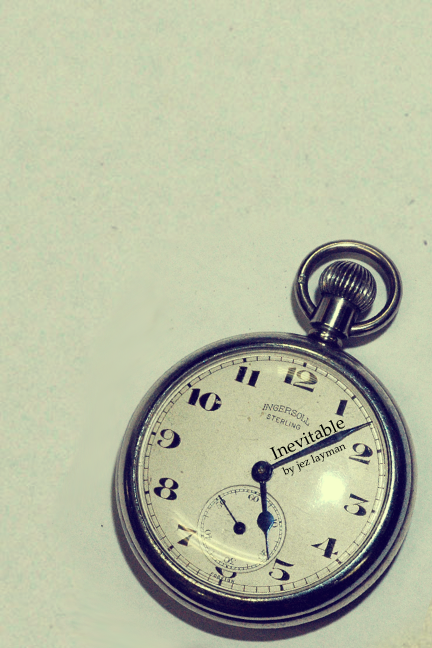
My novel this year is called Inevitable, though you've likely seen my refer to it as "The Time WIP" here. I scrapped what I had originally written and revamped the whole project and was rewarded with a fairly good starting point.
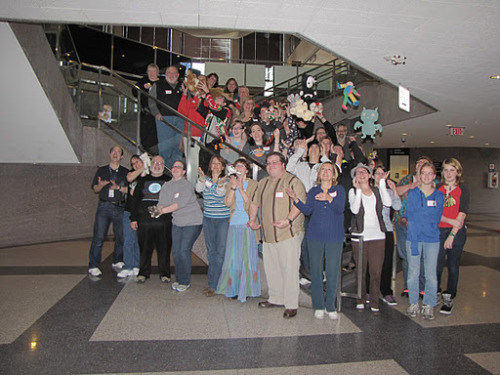
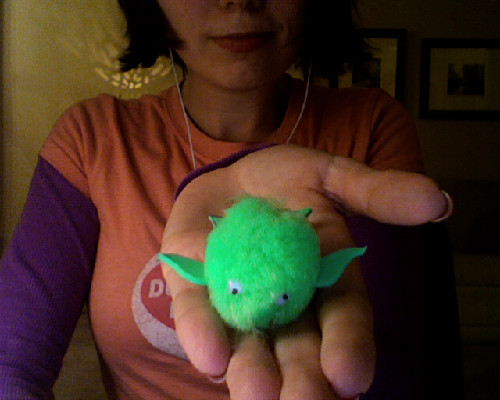
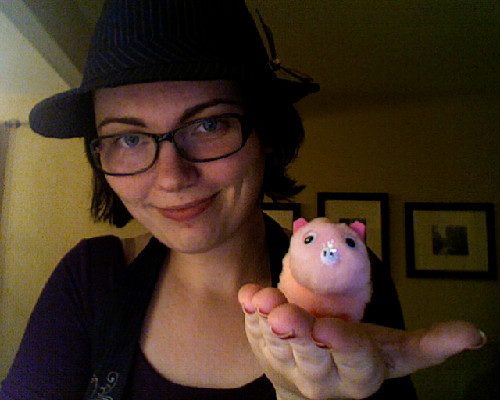
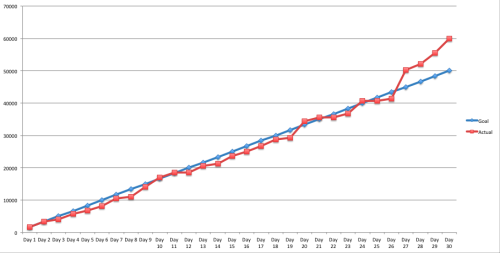
My success with reaching 50,000 words, and even more so with reaching 60,000 words, is in no small part due to the wonderful writing community of the Naperville NaNoWriMo chapter (or NaperWrimos). I attended two write-ins this year and was able to write 5k and 9k on those days respectively, thanks to the friendly and competitive nature of the meetings. Tim was a great help by encouraging me with additional challenges, promising me plot critters as prizes. At the end, I was rewarded with a great time at the TGIO Party, as well as a 60k start on a novel.
Afterwards, the NaperWrimo community proved to be even more helpful, by encouraging me to keep writing and work towards finishing my first draft. The forums are still alive, as is the community. Last week I met David, Katherine, and Carly at Caribou and had some fun with some editing and reading exercises. David has set me a goal of writing 2 more chapters (or 8,000 words) by our next meeting on the 26th. I'm already benefitting from having a deadline and accountability, but I also enjoy having writing friends to talk to, learn from, and share stories with, especially in person.
I'm still writing and, unfortunately, this means a lot more research. But I shall persevere!
P.S., if anyone knows of any good documentaries on the Battle of Gettysburg, drop me a line.

My novel this year is called Inevitable, though you've likely seen my refer to it as "The Time WIP" here. I scrapped what I had originally written and revamped the whole project and was rewarded with a fairly good starting point.
The main reason I was so successful with NaNoWriMo this year (I won with 60,013 words) is that I love the characters and even more than that, I love the world I created. I had fun with the idea of the Collective—a future version of our world where many superpowers have joined to create one massive empire—and the way I portrayed time travel in this novel. Time travel alone provided me a lot of room for experimentation and imagination. If all goes well, I will continue the themes in this book and write a three-book series of novels surrounding Jonah, Kevin, and the Historians. Additionally, I also want to write a fourth spin-off novel about Rosie Davis, my 1920s correspondent.Jonah McCameron has known since he was twelve years old that he would become a Historian someday, because he was told so. Ten years later, Jonah meets the stern, yet slightly mad Dr. Miles, a professor and Historian, who soon becomes Jonah's mentor. With the help of Dr. Miles, Jonah learns the truth about the Collective Historical Society: that the men and women who make up its body do not simply research history, but experience it first-hand, with the aid of time travel. As an Apprentice Historian, Jonah learns the tricks of the trade, but is soon plagued by questions regarding fate and free will, with no thanks to the mysterious Kevin Doyle. In this novel, Jonah will relive the past, work to change the future, and learn why foreknowledge is so dangerous.
My success with reaching 50,000 words, and even more so with reaching 60,000 words, is in no small part due to the wonderful writing community of the Naperville NaNoWriMo chapter (or NaperWrimos). I attended two write-ins this year and was able to write 5k and 9k on those days respectively, thanks to the friendly and competitive nature of the meetings. Tim was a great help by encouraging me with additional challenges, promising me plot critters as prizes. At the end, I was rewarded with a great time at the TGIO Party, as well as a 60k start on a novel.
Afterwards, the NaperWrimo community proved to be even more helpful, by encouraging me to keep writing and work towards finishing my first draft. The forums are still alive, as is the community. Last week I met David, Katherine, and Carly at Caribou and had some fun with some editing and reading exercises. David has set me a goal of writing 2 more chapters (or 8,000 words) by our next meeting on the 26th. I'm already benefitting from having a deadline and accountability, but I also enjoy having writing friends to talk to, learn from, and share stories with, especially in person.
I'm still writing and, unfortunately, this means a lot more research. But I shall persevere!
P.S., if anyone knows of any good documentaries on the Battle of Gettysburg, drop me a line.
Monday, October 17, 2011
Pep Talks to Myself
Lately I've had a hard time writing or getting into anything, really. I've been struggling with being stagnant after graduation. Where do I go from here? Why can't I seem to find a better job? If I go back to school, what should I get my masters in? What does it matter if I write or not?
Well, I gave myself a pep talk the other night that seemed to snap me back to reality, or at least writing. I told myself, J, you can either sit back and stay in this life you hate, or you can fight for a better future. I told myself, you are a fighter and you are going to fight like hell to keep doing the things you love. That means overcoming stagnation, fighting for a position, fighting against your deteriorating health. And it actually worked. I've decided to fight.
Part of that means returning to hope, returning to wishes, returning to dreaming up a better future. What this is means is that I inspire myself to write by thinking about the endgame, what happens after I'm published. I imagine what fans will like or not like, what they will argue with each other about, how they will react. My favorite past-time has always been imagining giving book talks or being interviewed about my books.
If you follow me on tumblr, you've probably noticed I've been in a bit of a tag vomit mood this week. A few of those entries were related to this kind of dreaming, where I imagine how future students looking at my work will imagine me and/or will interpret my books. This comes largely out of the fact that sometimes English majors over-analyze a book and find more meaning in it than the writer originally intended. Anyway, here are the tags, and links to their respective posts.
Part 1: A Response to Leonardo Da Vinci's hand studies
someday if my books are ever published students will study me and my weird (and somewhat macabre) obsession with hands and they will write papers about how I feared nothing but losing them. They will write that I was most fascinated by hands, how they mean losing everything and yet they were the key to creating everything. my hands are my everything. Just kidding. They will write papers about me saying she wrote a lot about hands and potatoes and we're really not sure why. Maybe she secretly wanted to be a farmer
Part 2: A Response to Seamus Heaney's "Digging"
this is the post all the students who will study my works in the future will cite on their essays saying look Teacher she is obsessed with potatoes just like we said. this poem represents how she wanted to be a farmer just like all the generations of her family before her. both sets of grandparents and her uncle had a farm you know. but she didn't work on a farm so she decided to dig with her pen like Heaney did. as you can see I've done my research and I can find you more evidence of why Layman writes so much about hands and potatoes. She was kind of a weird writer but I guess all writers are weird. except this one didn't drink or take opium or anything. she was just obsessed with potatoes and hands I guess.
TL;DR: dreaming about being famous in the future helps me write my novels, because I feel like I have something to work towards. If you're having trouble, maybe this will help you too. Maybe I'm just delusional.
Well, I gave myself a pep talk the other night that seemed to snap me back to reality, or at least writing. I told myself, J, you can either sit back and stay in this life you hate, or you can fight for a better future. I told myself, you are a fighter and you are going to fight like hell to keep doing the things you love. That means overcoming stagnation, fighting for a position, fighting against your deteriorating health. And it actually worked. I've decided to fight.
Part of that means returning to hope, returning to wishes, returning to dreaming up a better future. What this is means is that I inspire myself to write by thinking about the endgame, what happens after I'm published. I imagine what fans will like or not like, what they will argue with each other about, how they will react. My favorite past-time has always been imagining giving book talks or being interviewed about my books.
If you follow me on tumblr, you've probably noticed I've been in a bit of a tag vomit mood this week. A few of those entries were related to this kind of dreaming, where I imagine how future students looking at my work will imagine me and/or will interpret my books. This comes largely out of the fact that sometimes English majors over-analyze a book and find more meaning in it than the writer originally intended. Anyway, here are the tags, and links to their respective posts.
Part 1: A Response to Leonardo Da Vinci's hand studies
someday if my books are ever published students will study me and my weird (and somewhat macabre) obsession with hands and they will write papers about how I feared nothing but losing them. They will write that I was most fascinated by hands, how they mean losing everything and yet they were the key to creating everything. my hands are my everything. Just kidding. They will write papers about me saying she wrote a lot about hands and potatoes and we're really not sure why. Maybe she secretly wanted to be a farmer
Part 2: A Response to Seamus Heaney's "Digging"
this is the post all the students who will study my works in the future will cite on their essays saying look Teacher she is obsessed with potatoes just like we said. this poem represents how she wanted to be a farmer just like all the generations of her family before her. both sets of grandparents and her uncle had a farm you know. but she didn't work on a farm so she decided to dig with her pen like Heaney did. as you can see I've done my research and I can find you more evidence of why Layman writes so much about hands and potatoes. She was kind of a weird writer but I guess all writers are weird. except this one didn't drink or take opium or anything. she was just obsessed with potatoes and hands I guess.
TL;DR: dreaming about being famous in the future helps me write my novels, because I feel like I have something to work towards. If you're having trouble, maybe this will help you too. Maybe I'm just delusional.
Updates (Six Month Hiatus Explained)
Well, it's been six months since I was last here. Sorry about that. Here's a few quick updates, then I'll make a second update about what I actually came here to write.
Health: I learned recently that I do not have carpal tunnel, but that I actually have cubital tunnel, which is somewhat similar, but uses the ulnar nerve and runs through the elbow instead. I'm on anti-inflammatories and some light therapy, but I think the thing that really helped it was just knowing the cause and the things to avoid. But more importantly, the pain I've been feeling is not a result of cubital tunnel syndrome, but is in fact a "more serious issue" we're currently trying to determine. I go in on Wednesday for blood tests to determine whether or not I have RA, which is the most likely result.
Zenith: Has a new intro that I rather like, but other than that, has been sitting ignored for a few months. I really need to go through and do final edits, but I just can't seem to find the motivation lately (we'll get to that in a minute).
Inevitable aka the TimeWIP: If you only follow me here, you don't know about the TimeWIP yet. It is my current project, which involves time traveling Historians. Yep, I gave time travel to one of the most boring professions and denied it to everyone else. Basically, the Collective Historical Society has unlocked the key to time travel and they've found a way to limit access to it. Historians are sent back in time to witness important events and collect facts (and occasionally artifacts) on these events. The MC, James, is told when he's 12 that he'll become a Historian, because in the future he's already one and the CHS needs to make sure this happens. There's more to it after that, but that's where I am at the moment. I really enjoy writing about time travel.
NaNoWriMo '11: I will be participating again this year, partially because I want to get back into the habit of writing everyday, partially because I want to challenge myself with something I'm not very good at (realistic fiction), and partially because Casye needs a writing buddy. Originally I thought about using the TimeWIP, but I had already written pieces of it, so that would be cheating. Instead I'm going to write about a bunch of friends from college who get split up after graduation, which will highlight different kinds of LDRs and LDFs.
Health: I learned recently that I do not have carpal tunnel, but that I actually have cubital tunnel, which is somewhat similar, but uses the ulnar nerve and runs through the elbow instead. I'm on anti-inflammatories and some light therapy, but I think the thing that really helped it was just knowing the cause and the things to avoid. But more importantly, the pain I've been feeling is not a result of cubital tunnel syndrome, but is in fact a "more serious issue" we're currently trying to determine. I go in on Wednesday for blood tests to determine whether or not I have RA, which is the most likely result.
Zenith: Has a new intro that I rather like, but other than that, has been sitting ignored for a few months. I really need to go through and do final edits, but I just can't seem to find the motivation lately (we'll get to that in a minute).
Inevitable aka the TimeWIP: If you only follow me here, you don't know about the TimeWIP yet. It is my current project, which involves time traveling Historians. Yep, I gave time travel to one of the most boring professions and denied it to everyone else. Basically, the Collective Historical Society has unlocked the key to time travel and they've found a way to limit access to it. Historians are sent back in time to witness important events and collect facts (and occasionally artifacts) on these events. The MC, James, is told when he's 12 that he'll become a Historian, because in the future he's already one and the CHS needs to make sure this happens. There's more to it after that, but that's where I am at the moment. I really enjoy writing about time travel.
NaNoWriMo '11: I will be participating again this year, partially because I want to get back into the habit of writing everyday, partially because I want to challenge myself with something I'm not very good at (realistic fiction), and partially because Casye needs a writing buddy. Originally I thought about using the TimeWIP, but I had already written pieces of it, so that would be cheating. Instead I'm going to write about a bunch of friends from college who get split up after graduation, which will highlight different kinds of LDRs and LDFs.
Saturday, April 23, 2011
The Damsel and My Worst Fear
Has it really been six months? My. I'm sorry, folks. I am still alive and I am still writing. Here's what I've been up to since my last post:
- "The Damsel" won first place in the fiction division of the OPUS writing contest. I was unable to make it to the awards ceremony because I had work, but my good friend Bethany was nice enough to accept the award on my behalf. She read the first few pages of the story and from what I've been told, the audience reacted quite well. One of my professors in attendance emailed me to say that the audience laughed and murmured in appreciation. We're printing the story in our school's literary magazine as well, so we're hoping that "The Damsel" might be a draw for students to pick that up once it comes out. It's rather killing me that I wasn't there to read the piece myself and see the reactions with my own eyes. The whole night at work all I could think was, somewhere out there, someone is hearing my story, and I have no idea how they feel about it. I suppose that's something I'm going to have to get used to at some point.
- I graduate in 3 weeks. 3 weeks to the day, actually. I'm quite looking forward to it at this point. This semester has been eating me alive, between 17 credits and two (and later three, sort of) jobs. That's one of the major reasons why I haven't posted here since late November. Soon, though, I will be done with school entirely and I will have time for these sorts of things. Even more importantly, I will have time for finishing Zenith and moving onto my next project (it involves time travel!).
- Another big reason I haven't been around is that I haven't had the strength. I have carpal tunnel and tendonitis in both hands/wrists and it's been really bad this year. Even with a brace, typing is hard and I was only able to do it in short bursts. Most of the time, I had to dedicate that to my homework assignments, and some of those I couldn't even manage. Thankfully, my professors were understanding and gave me extensions on the larger papers, but blogging was absolutely out of the question. So was writing. I was basically starting in on my worst fear: losing my hands. The absolute worst part about it was not that I was in constant pain, but that I couldn't write about it. That was all I wanted, to write about how it felt, and I couldn't. That pain goes so much deeper.
Friday, November 26, 2010
Draft 3, here I come!
November 2009, I sat down at my computer thinking "Okay, I can do this: I can write a novel." As the months wore on, I started to question the validity of that statement. Could I really write a full novel? I knew I could start one, I'd done that dozens of times before, but could I actually finish one? Most days, I wasn't so sure, but I kept at it anyway. Then in February 2010, I did it: I finished...the first draft.
Then a few months later, the second. In July, I sent out copies of my manuscript to a few willing participants who had promised me feedback. One of them responded with notes on the entire novel, another on the first twelve chapters, still another on the first chapter (though, to be fair, this was all she had received).
And now, in November of 2010, a little over a year after I first began this project, I am beginning work on the third draft of Zenith.
I once compared rewriting to surgery:
Then a few months later, the second. In July, I sent out copies of my manuscript to a few willing participants who had promised me feedback. One of them responded with notes on the entire novel, another on the first twelve chapters, still another on the first chapter (though, to be fair, this was all she had received).
And now, in November of 2010, a little over a year after I first began this project, I am beginning work on the third draft of Zenith.
I once compared rewriting to surgery:
For years I have heard authors toss around this phrase, that all writing is rewriting. I want to tell them they've got it backwards, that all rewriting is writing. You have a fully formed first draft and suddenly, you are starting from scratch. There is no such thing as a minor edit at this point, this is not plastic surgery. This is orthopedics, the breaking and reforming and placement of bones, the bare skeleton of what you wish to create. This is heart surgery and brain surgery, this is fixing the insides of a story so that it can live and breathe and speak on its own someday. You recreate the story, instead of making it look better. You rewrite it. Re-write. Write again. You essentially write a second novel, by fixing up that first draft.I stand by everything I said then and I am happy to say that my patient is out of the woods and stable these days. No more trauma surgery, no more heart or brain surgery. I now get to move on to the less threatening issues. I can focus on the lacerations and bruises, make sure everything is okay and stable. I get to comb my novel for inconsistencies, make sure my characters and my story get across well enough, and destroy all evidence of typos and grammar faux-pas. This is plastic surgery, the surface reformations and beautification stage. I hope it comes out pretty enough, in the end.
Thursday, November 4, 2010
NaNoWriMo '10 - Why are You Participating?
There are many reasons why writers and hopeful writers join in the fun insanity of NaNoWriMo each year, but I thought it would be important to touch on a few of them, for the first year participants especially.
I want to write the Next Great American Novel.
That's awesome! I am all for that and I support you fully...but NaNo is not the place to start. The thing about NaNoWriMo is that you are writing so much on such a short, fairly unrealistic (in terms of a complete novel) deadline, that whatever you write is going to suck. Letting your work suck is the only way you will finish by 30 November, trust me. You will not be able to write an amazing work of Literature during NaNoWriMo, but you can get a start, which brings me to the next reason.
I want to get my ideas down.
This is the much more realistic and sane approach to option A above. Don't worry about specifics or quality, just get your ideas down on the page and get that word count up. 50,000 words of crap may not make a novel, but it makes for one hell of a detailed outline for the Next Great American Novel. Use it as a guide to help you actually write a novel after November has ended and I think you'll find it much easier to navigate your ideas when they are on the page than when they are floating freely in your head.
I want to get into the habit of writing everyday.
This, my friends, is what NaNo was created to do. NaNo is not about writing an amazing novel that you can send off to agents on 1 Dec (note: do not do this. Under any circumstances), it is about writing everyday, getting words out even when you feel like you don't have much to say. When you force yourself into doing it and have a quota to make each day, you are much more likely to write. And as Madeleine L'Engle said, "inspiration usually comes during work, rather than before it." Sometimes the hardest part of writing is just sitting down and starting—that's what NaNo is meant to help you with.
I want to write the Next Great American Novel.
That's awesome! I am all for that and I support you fully...but NaNo is not the place to start. The thing about NaNoWriMo is that you are writing so much on such a short, fairly unrealistic (in terms of a complete novel) deadline, that whatever you write is going to suck. Letting your work suck is the only way you will finish by 30 November, trust me. You will not be able to write an amazing work of Literature during NaNoWriMo, but you can get a start, which brings me to the next reason.
I want to get my ideas down.
This is the much more realistic and sane approach to option A above. Don't worry about specifics or quality, just get your ideas down on the page and get that word count up. 50,000 words of crap may not make a novel, but it makes for one hell of a detailed outline for the Next Great American Novel. Use it as a guide to help you actually write a novel after November has ended and I think you'll find it much easier to navigate your ideas when they are on the page than when they are floating freely in your head.
I want to get into the habit of writing everyday.
This, my friends, is what NaNo was created to do. NaNo is not about writing an amazing novel that you can send off to agents on 1 Dec (note: do not do this. Under any circumstances), it is about writing everyday, getting words out even when you feel like you don't have much to say. When you force yourself into doing it and have a quota to make each day, you are much more likely to write. And as Madeleine L'Engle said, "inspiration usually comes during work, rather than before it." Sometimes the hardest part of writing is just sitting down and starting—that's what NaNo is meant to help you with.
Sunday, October 31, 2010
NaNo Countdown: 3 hours
NaNoWriMo '10 is about to start and has already started for some of you. Exciting, right? More like terrifying. I just had my first case of Writer's Doubt and Panic and November hasn't even started yet. I'm not entirely sure where my story is going or if I even have an actual plot. Yes, I posted that bit about Caroline, but I don't think it's strong enough to carry the whole story. I've toyed with other ideas, both to improve this story and to pursue other options.
Panic is common, doubt even more so. Getting past that and getting words on the page is what makes you a writer.
Panic is common, doubt even more so. Getting past that and getting words on the page is what makes you a writer.
Monday, October 25, 2010
NaNoWriMo in Years Past
I mentioned yesterday that this is my 4th year doing NaNoWriMo and since this blog is not old enough for me to have mentioned these before, I thought I'd make a list of the different stories I've attempted and the different issues I've faced in writing them (ie: why I didn't finish).
2006: The Elemental Spell: Fantasy/Humor
Main Idea: An alchemist in a parallel universe accidentally kidnaps two step-siblings from a Ferris wheel in our world when attempting a spell for beef Wellington. The three try to re-open the portal between the worlds to get the children home safely, but another alchemist wants to exploit it because Earth items are the biggest trend. Basically, all alchemists are Earth fanboys. Lots of satire, really stupid jokes, and a dictionary as a spellbook.
Why it Didn't Work: My computer died somewhere around 25k. It was tragic.
What Happened to It: I have since worked on this, but while I love it, I realize it's not entirely worth fixing. Someday I may rewrite it, but for now it would require too much effort to fix all the major faults.
2007: Reconnect: Realistic/YAL/Teen Drama
Main Idea: Two teens who live next door to each other and grew up as friends have grown apart by the time they enter high school and reconnect online. Delilah is sort of a preppy girl with good grades and a booming social life, but she's sometimes pressured into things by her friends that she doesn't want to do. Max(?) is a geeky shy guy who is one of the smartest kids in class, but sticks to the wayside.
Why it Didn't Work: It sucks. Sucks sucks sucks sucks. I gave up on it completely way before the ending and I can't believe I started it. Also, I'm not very good at realistic fiction, tends to bore me.
What Happened to It: About a year later I lost the document completely after a freak file naming accident. I have a few scraps on paper left over and a few pieces from my old writing blog, but for the most part it is gone. Which is good because it sucked, but I also sort of miss it, just because it was a piece of me.
2008: Nothing!
2009: Zenith: Science Fiction (YAL)
Main Idea: Rob's grandfather, Fagan, lives on one of the last true farms in existence, but he's being forced to move soon. Fagan doesn't want to leave his home, but more than that, he's hiding a plane illegally in the barn. Air travel no longer exists, outlawed for "safety reasons" by the government, but this turns out not to be true. After Rob discovers that his new friend Risty is part cyborg, she blackmails him and his grandfather into helping her discover the truth in what's really happening behind the clouds.
Why ItDidn't Worked: For one, I got really attached and I loved it. The world was new to me, something I could create, but didn't have to be so far off from our own. But more than that, the characters felt real. They were distinct, but not unheard of, they had stories and faults and heart and I loved them to pieces, even when I disagreed with what they were doing. I had a good idea of who they characters were and what they wanted and where I wanted to go with the story and I went there. I reached a point when I didn't know what was going to happen next, but I kept on writing and well, that's when the good stuff happened.
What Happened to It: I have since finished writing Zenith and gone through a few rounds of edits. It is currently in the beta reading stage and once I have more time on my hands (Christmas break, most likely), I'm going to edit it again and once I feel I've done enough, I'm going to query it to agents.
2006: The Elemental Spell: Fantasy/Humor
Main Idea: An alchemist in a parallel universe accidentally kidnaps two step-siblings from a Ferris wheel in our world when attempting a spell for beef Wellington. The three try to re-open the portal between the worlds to get the children home safely, but another alchemist wants to exploit it because Earth items are the biggest trend. Basically, all alchemists are Earth fanboys. Lots of satire, really stupid jokes, and a dictionary as a spellbook.
Why it Didn't Work: My computer died somewhere around 25k. It was tragic.
What Happened to It: I have since worked on this, but while I love it, I realize it's not entirely worth fixing. Someday I may rewrite it, but for now it would require too much effort to fix all the major faults.
2007: Reconnect: Realistic/YAL/Teen Drama
Main Idea: Two teens who live next door to each other and grew up as friends have grown apart by the time they enter high school and reconnect online. Delilah is sort of a preppy girl with good grades and a booming social life, but she's sometimes pressured into things by her friends that she doesn't want to do. Max(?) is a geeky shy guy who is one of the smartest kids in class, but sticks to the wayside.
Why it Didn't Work: It sucks. Sucks sucks sucks sucks. I gave up on it completely way before the ending and I can't believe I started it. Also, I'm not very good at realistic fiction, tends to bore me.
What Happened to It: About a year later I lost the document completely after a freak file naming accident. I have a few scraps on paper left over and a few pieces from my old writing blog, but for the most part it is gone. Which is good because it sucked, but I also sort of miss it, just because it was a piece of me.
2008: Nothing!
2009: Zenith: Science Fiction (YAL)
Main Idea: Rob's grandfather, Fagan, lives on one of the last true farms in existence, but he's being forced to move soon. Fagan doesn't want to leave his home, but more than that, he's hiding a plane illegally in the barn. Air travel no longer exists, outlawed for "safety reasons" by the government, but this turns out not to be true. After Rob discovers that his new friend Risty is part cyborg, she blackmails him and his grandfather into helping her discover the truth in what's really happening behind the clouds.
Why It
What Happened to It: I have since finished writing Zenith and gone through a few rounds of edits. It is currently in the beta reading stage and once I have more time on my hands (Christmas break, most likely), I'm going to edit it again and once I feel I've done enough, I'm going to query it to agents.
Sunday, October 24, 2010
NaNo Countdown: 8 Days!
Hey folks, it's just about that time again! That's right, it's the time when we give up sanity, sleep, and friends all for the sake of our writing!
This will be my fourth attempt at NaNoWriMo and if all goes well I will "win" for the second year in a row. I'll be honest with you folks, I want to win, but I'm not going to be as devoted as I was last year. My schedule is fairly crammed with school and work, more so than last Fall, but I am going to do my best. I'll budget my time and take advantage of my 3 hour schedule breaks between classes/work.
I wanted to try something new this year, so I'm attempting a story unlike any I've ever done. I'm writing a sports book. A sports book. I don't even play sports! I also don't write a lot of realistic fiction, so this might be a challenge for me.
If you want to friend me on the NaNo site, my username is typesetjez!
This will be my fourth attempt at NaNoWriMo and if all goes well I will "win" for the second year in a row. I'll be honest with you folks, I want to win, but I'm not going to be as devoted as I was last year. My schedule is fairly crammed with school and work, more so than last Fall, but I am going to do my best. I'll budget my time and take advantage of my 3 hour schedule breaks between classes/work.
I wanted to try something new this year, so I'm attempting a story unlike any I've ever done. I'm writing a sports book. A sports book. I don't even play sports! I also don't write a lot of realistic fiction, so this might be a challenge for me.
Tonight I finally figured out all the girls on the main team (The Rockin' Rollers), both their real name and their derby names. I love how much a derby name says about a girl, whether they're fun, sexy, or smart, even what their interests are. These girls love poetry, music, science fiction shows, and cooking. Never has naming characters been more fun.Caroline Reyes is a competitive inline speed skater training for the Nationals. In an attempt to gain an edge and clock in some extra track time (and after a few dares & challenges), Caroline tries out for a roller derby team—and makes it. Despite skating almost her whole life, derby proves challenging to Caroline. She'll have to learn how to skate on four wheels, play as a team, and most importantly: take a hit. But what happens when she has to choose between her dream and her team?
If you want to friend me on the NaNo site, my username is typesetjez!
Sunday, August 29, 2010
The Writer's Journey
So, after my post earlier this evening, I realized I never actually posted the narrative to which many of my posts refer. This is something I wrote for my English 321 course last Spring, something I hope fellow writers will relate to and enjoy (especially if you like hyperbole).
The Journey: An Autobiography of a Writer
Not many walk this road, and fewer still reach their destination, the majority turning back before the journey is through. Warning signs line the start of the trail and even the most experienced of travelers, though they remind you to follow your dreams, discourage the trip unless you are absolutely positive it's what you want to do. It takes a certain kind of person to take that chance, to try their hand at writing, and not everyone succeeds. Writing requires you to walk into the forest without a map and little direction, with only your heart, your imagination, and a stubborn will to guide you. It's an adventure, a journey, a quest.
Many people first begin to explore the area when they are young, making up stories to amuse themselves or others. Some quickly grow out of it, convinced that fiction and fairy tales are juvenile, but the rest of us stick with it, some for love of the craft, some for the challenge, and some of us just don't know anything else. When I started writing, none of these applied. Learning the basics caused me stress, less equipped than all the others, and carrying the weight of dyslexia like manacles around my ankles, making the first steps almost impossible to take. I expended extra efforts to keep up with my classmates, but writing remained a challenge for years to come. Still, I kept at it, and at age thirteen I realized that all those years dragging the chained ball behind me and strengthened my legs, strengthened my skills. I discovered that my limits could not hold me back, not when I possessed a gift and a desire for writing.
I ran into that forest, ignoring the caution signs and rushed head-first into a novel without stopping to learn the territory. Treacherous traps awaited at every turn, walls sprang up so suddenly I had no choice but to run into them, and writing proved to be dangerous indeed. I look back on those first drafts now, the footsteps behind me on this trail, and I find typos, grammar mistakes, confusion, plot twists that lead into black holes, and characters without purpose or depth, but somewhere beneath all of that, calling out to me like a siren, is a small nougat of talent, a kernel of hope. That first novel, fated to stay in the dark forest forever, provided me practice, helped me learn the way of the land. I could identify dangers sooner, learn to deal with common mishaps, and live in that world. I decided to make my home there, to become a writer like the heroes I so admired, but I knew it wouldn't be easy.
Once I promised myself this life, I knew I had to take more precautions and turn my unguided wanderings into a quest. I enrolled in classes on writing and gained a set of directions and a map, instructing me where to begin and who to speak to. I found my teachers in the forest and they handed me lists of tasks, telling me I'd receive my reward at the end. Much to my surprise, these were not payments, but talents I would develop and knowledge I would gain. I learned the many different types and styles of sentences and paragraphs, discovered ways to identify and tame them, and the creatures, elusive and unattainable before, became my tools to tackle the terrors of the forest.
The first task following these on my quest was a narrative, something I thought I knew. The beasts I befriended previously were nothing compared to this dragon, a challenge for me to overcome. Like the Red Crosse Knight, a creation of this place from long ago, I fought this dragon three times before I prevailed, though I did not share in the knight's luck with the well, and sustained many scratches and scars from my battle. My first experience on the quest might have scared another off, but not me. I continued completing the tasks given to me and learned all that I could, so that on my next encounter with a narrative, I was prepared. The second time, I succeeded, learning to use my newly acquired tools and my old talent to my advantage.
Even though I survived these following missions, I still felt clumsy in the forest, taking so many precautions that I discovered very little about myself or my craft. I realized that in order to succeed in this realm, one has to remember the chance they first took when they walked past the warning signs and into the dense thicket. Writing requires risk, so risks I began to take. I explored the darker parts of myself that I once thought I could not or should not approach and put them down on the page. I exercised my ghosts, revealed my deepest fears, and through them grew into a stronger, braver writer. Once the words escaped me, pent up inside my body for so long, I felt relieved, light. The challenges of this mythical world existed not just around me, but within me, from the place in my heart from which words poured. I had learned how to tame the words, but they were nothing without depth and purpose, so I began to create new pieces, infusing a piece of my soul into each one, letting them take on a life of their own.
Those writings became narratives unlike the dragons I had fought, but creatures that reflected the trials I had endured, mirrors to remind me where I had been. More importantly, though they revealed my hidden pain to the world, these creations proved to me that I could survive in this land, that I could use magic like my masters, conjuring and summoning the words that could create, the words I would survive by. I did not start out at a young age as an apprentice; I was not bred for this role. I became the stories I wanted to write: the innocent, unassuming child, struggling in life, who overcame the obstacles and achieved her dream. With a long road still ahead of me, and a million predicaments and beasts waiting to try and stop me, I make my way through this forest on my journey, finally calling myself a writer.
The Monsters of Writing
We as writers risk our lives every day, trying to give the public what they want. We are like gladiators, facing terrible monsters and opponents all for the sake of entertaining others. Writers are no strangers to fear and frustration, believe you me.
The Biggest Monsters You Will Be Asked to Face as a Writer
The Biggest Monsters You Will Be Asked to Face as a Writer
- Research - after coming up with an idea and forming a rough plot, you might be asked to face Research, one of the biggest monsters of the Writing World and one that will pop up again and again. You cannot ever truly defeat this beast, it is immortal. When you face this creature, keep that in mind; you are not fighting to kill, you are fighting to survive. Still, facing Research is essential in your quest as a writer and each time you face it, you will grow stronger, gain knowledge, and be able to face your novel with more courage and confidence than ever before.
- Doubt - This is another creature that will spring up time and time again, generally when you least want it to. It's always hard to beat and afterwards your confidence is shaken and you constantly question your ability to complete your Journey. Doubt generally coincides with other challenges, such as The Wall and The Unmarked Path. Sometimes the best defense against this monster is to simply ignore it. Embrace that 5-year-old mentality that if you don't acknowledge its existence, it can't truly exist.
- Revision - This beast often attacks at the same time as Doubt on the second leg of your Journey to Publication. You've acquired your basic skills and materials and you've finished the first draft of your Novel, but now it's time to revise. Don't be afraid to really fight this monster, cutting out words, sentences, chapters, and limbs. Don't hold back, because if you do, you'll only have to face it again later. Each time you face this dreadful foe, it's harder and harder to put up a fight, as it wears you down. You thought you were done and Revision rears its ugly head to remind you that you aren't. It's like starting over, but it is survivable.
- Querying - This is the true test of your strength and skills. Your Novel has to be the Best in Show, able to blow away any obstacles and impress the judges like no one ever has before. This is not quite the final battle in your Journey, but it is the turning point. Every foe you've faced up until now has been in preparation for this terrifying beast. Luckily, there are many guides that can help you train for such a match scattered about on the internet. I urge you to study them before you charge into battle.
That said, know that I am facing the first Monster on this list with my next project, as I've defeated the somewhat lesser foe of Lack of Inspiration, a close cousin to Doubt.
If you have any other Monsters you feel should be included in this Survival Guide, or any additional notes on how to defeat the ones above, please leave them in the comments.
Saturday, August 21, 2010
Querying The Damsel
Well, I did it: I just sent off query letters to four different agents, so cross your fingers for me! I'll keep you updated as I hear news, of course. Since many of you are in the same boat as I, looking for an agent or hoping to someday be published, I thought I might leave you a few tips on querying.
General Rules for Querying
General Rules for Querying
- Research First. Find out about the agent, what they represent, where their tastes lie, and if they are currently accepting queries. You can find an agent via a search engine like AgentQuery, or by querying the agents of works similar (but not too similar!) to yours.
- Follow the Guidelines. Now, there's no hard and fast rule here and this goes hand in hand with the above rule, but please make sure you have read the guidelines specific to the agent you are querying. Some want specific fonts, some want only the query, some want sample pages; it all depends on the agent.
- Keep it Professional. Publishing is a business, so treat it as such. Use formal block formatting in your query email or letter and treat the agent with respect. These agents are not your high school buddies, so please don't write to them as if they were.
- Personalize Your Query. An agent can tell if you've written one query and sent it out to fifty people at once. Personalize your query to fit the agent, appeal to their tastes and add any information you feel is important that you've learned about them through your research.
- Proofread Your Query. This may seem like a no-brainer, but do you really want to take that chance? Edit your query just as you would edit your novel to make sure it flows well, makes sense, and is free of those pesky typos. Additionally, have a friend/teacher/writing buddy read over your query as well.
Wednesday, August 18, 2010
On Querying and the Loss of Inspiration
Hello all, thanks for being patient with my lack of posts as of late. It feels like my desire to write and be inspired has been on pause for a few weeks, no doubt due to a mass of real-life drama, but I'm doing my best to get back to the thing I love most. Unable to truly get back into it full force, I opted for editing one of my short stories, The Damsel, which I speak about here.
When I write and edit my works, I usually know which ones I'm going to query and which ones are mostly just for practice. I get a feeling that Hey, this is really something special, I could maybe do something with this. Or, it's good enough that I'll let my friends read it, so I should try it out with agents, too! And then sometimes I get a feeling that okay, yeah, this is not going anywhere--but I do try to finish those pieces anyway.
With Zenith, the feeling was most definitely I Could Query This, and I will, once I go through one more round of edits (and hopefully hear back from more than one of my beta-readers). With The Damsel, the feeling was more I Need to Share This. I've gotten quite a bit of good feedback on that one, so I hope that no one is lying to me, as this is what I generally assume of people reading my works.
So, yeah, I'm querying The Damsel today. I did some research (mostly utilizing AgentQuery) and will be sending off the queries themselves either tonight or tomorrow. I'm waiting to hear back from two agents that I would love nothing more than to be represented by on whether or not they represent short stories. If not, I'll go directly to my #3 choice whom I am especially excited about also. I'll keep you all updated on the process!
When I write and edit my works, I usually know which ones I'm going to query and which ones are mostly just for practice. I get a feeling that Hey, this is really something special, I could maybe do something with this. Or, it's good enough that I'll let my friends read it, so I should try it out with agents, too! And then sometimes I get a feeling that okay, yeah, this is not going anywhere--but I do try to finish those pieces anyway.
With Zenith, the feeling was most definitely I Could Query This, and I will, once I go through one more round of edits (and hopefully hear back from more than one of my beta-readers). With The Damsel, the feeling was more I Need to Share This. I've gotten quite a bit of good feedback on that one, so I hope that no one is lying to me, as this is what I generally assume of people reading my works.
So, yeah, I'm querying The Damsel today. I did some research (mostly utilizing AgentQuery) and will be sending off the queries themselves either tonight or tomorrow. I'm waiting to hear back from two agents that I would love nothing more than to be represented by on whether or not they represent short stories. If not, I'll go directly to my #3 choice whom I am especially excited about also. I'll keep you all updated on the process!
Monday, July 26, 2010
The Time to Write Your Novel is Now

I love waking up to see my hibiscus covered in large, open flowers, but by the next day, those blooms are gone. A hibiscus flower only lasts about a day, maybe two, but by then it's drooping and starting to discolour. You have to savour the beauty while it lasts, the day it's available.
Free time, too, is a beautiful thing. You realize that it's there, wake up to its presence, but you choose to ignore it for the moment because you've got a TV show to catch up on or some errands to run. You get home at the end of the night and you realize your free time is dwindling and will soon be gone. You ignored its beauty, you didn't take advantage of it when you could.
The time to write your novel is now, while you've got the time. Don't wait until the flowers are gone, appreciate the beauty while it's still here. Fall and winter are coming, you may not have the chance after today.
Thursday, July 15, 2010
Rags to Riches: Where's My Dénouement?
I don't always post my writings here, but here's a short narrative I came up with earlier, in lieu of my recently crushing financial problems.
Rags to Riches, by Jez Layman
Whoever penned my story got it wrong. I was supposed to be rags to riches. I spent my first years in the trailer park, only they called it a mobile home community; it sounded nicer. Now we have a house. It's lovely, if you don't get too close. Just stay on the street, never mind the cracked siding and peeling paint, stay away from the faded door, the messy hallways and imperfections. Inside we've tried to make it look nice, but it's nothing compared to you and your house. I'm sorry, we did the best we could, really. But look at it from the street, from far off, it's smart, it's quaint. It's our dream. It's not much, but it's a house, that's all we wanted and maybe it's not perfect, but it's ours.
A house meant we were moving up, out of the trailer park and on with our lives, but, it didn't, not really. My story got messed up somewhere along the way. Someone put in one too many conflicts and added catastrophe instead of a dénouement. Things were supposed to get better, not worse. We were supposed to be able to live in the house, it was supposed to be pretty. The days were supposed to be filled with successes and happiness, not struggle and mountains of bills. I was supposed to escape everything when I left, when we got a house, but someone penned it wrong. Where's my rising action, where's my turning point? Where's my brilliant love story, my heroic adventure, my long-lost relative to leave behind a fortune? Where's my happy ending?
Rags to Riches, by Jez Layman
Whoever penned my story got it wrong. I was supposed to be rags to riches. I spent my first years in the trailer park, only they called it a mobile home community; it sounded nicer. Now we have a house. It's lovely, if you don't get too close. Just stay on the street, never mind the cracked siding and peeling paint, stay away from the faded door, the messy hallways and imperfections. Inside we've tried to make it look nice, but it's nothing compared to you and your house. I'm sorry, we did the best we could, really. But look at it from the street, from far off, it's smart, it's quaint. It's our dream. It's not much, but it's a house, that's all we wanted and maybe it's not perfect, but it's ours.
A house meant we were moving up, out of the trailer park and on with our lives, but, it didn't, not really. My story got messed up somewhere along the way. Someone put in one too many conflicts and added catastrophe instead of a dénouement. Things were supposed to get better, not worse. We were supposed to be able to live in the house, it was supposed to be pretty. The days were supposed to be filled with successes and happiness, not struggle and mountains of bills. I was supposed to escape everything when I left, when we got a house, but someone penned it wrong. Where's my rising action, where's my turning point? Where's my brilliant love story, my heroic adventure, my long-lost relative to leave behind a fortune? Where's my happy ending?
Money Issues in YA vs Adult Literature
Note: This piece is one I originally posted on 21 May 09 on my other blog, Typeset World. It is reproduced here because I've been struggling with the same issue lately and felt it was worth reposting.
Generally, I believe that children's literature (including Young Adult) holds more positive qualities than adult literature does, but this isn't the case in all areas. The biggest thing for me, lately, is that in regards to money, adult books seem more realistic. There's a simple reason for this: adults worry about money more. Because they spend their lives working for that money, and they have to pay the bills for water, heat, electricity, medical, insurance, etc etc etc. Then they have to buy groceries and toilet paper and rubber bands. Whatever. The point is, adults are constantly aware of how much money is going in, and how much money is going out. This is reflected in book catered to the adult audience. We see many issues of money in this genre: characters needing to pay rent, or trying to get a raise, worrying about how they'll pay their medical bills whenever something goes wrong.
In children's books, you don't see this. First off, because children don't pay their own expenses, they rely on their parents. This doesn't mean that children don't worry about money. When do we get to read the stories about the child who hides in the bathroom for the first ten minutes of lunch period so they can be at the end of the food line so that no one is around to hear them when they tell the lunch lady they get a free lunch? The story of the kid who has to buy all their clothes at the second-hand store and purchase all their shoes a size or two larger because they can't afford new things all the time? The kid who doesn't go to birthday parties just so they don't have to show up without a gift because the family couldn't afford one?
We don't read these stories very often. I think the main reason of this is that children who are reading the books don't want to read about those problems all the time--especially if they're living them. They might just want to escape the problem, put themselves in place of the main character, and live like royalty for a few hours. That's totally understandable.
With YA however, I see it a little differently. Young adults are no longer children, but not yet adults. They're somewhere in the middle, age-wise, and in this issue as well. Or, at least, in my opinion, they should be. That doesn't mean that they are. This is the age, especially in the later teens, that one gets their first job and starts to pay some things on their own. Sure, these things may just be movie tickets or new cds (assuming they even buy hard copies anymore), but it's their own money, and they need to keep track of it. Even still, you don't see this as much as you would expect. Yes, in John Green's Looking For Alaska this issue is tackled through The Colonel, who is always having Pudge pay for his cigarettes because he can't afford them. We go to his trailer even. But the thing is, the Colonel, much as I love him, is not the main character here. He's not the narrator either. It's all Pudge, and Pudge has the money to pay for cigarettes for both of them, to pay for McDonald's, and his family can easily afford the private school. Generally, the main characters have money. This may also go back to how poverty-stricken children want to escape their money issues through literature, but it may just be a way to make things easier on the author. Things are so much easier to get going if the character can afford them.
Still, there are books that address these issues, I'm not saying there aren't. Suite Scarlett by Maureen Johnson is a great example. The family is having financial troubles and are barely keeping their head above water at the point where the story begins. The hotel is beginning to fall into disrepair and we see the ways this impacts the family members. It's great, and more than that, it's believable. It's something that some of us can relate to. So why aren't there more books out there like this one? Why do our main characters always have to be upper middle class with spare cash and cars (even if they're not new)? Will books featuring a few money issues (even small ones) become more popular in our current economic situation, or will we see rise to more books like Charlie and the Chocolate Factory, where the poor boy finds the golden ticket--a way to rise above the current situation? I'd love to hear your thoughts on anything mentioned. Leave them in the comments.
Generally, I believe that children's literature (including Young Adult) holds more positive qualities than adult literature does, but this isn't the case in all areas. The biggest thing for me, lately, is that in regards to money, adult books seem more realistic. There's a simple reason for this: adults worry about money more. Because they spend their lives working for that money, and they have to pay the bills for water, heat, electricity, medical, insurance, etc etc etc. Then they have to buy groceries and toilet paper and rubber bands. Whatever. The point is, adults are constantly aware of how much money is going in, and how much money is going out. This is reflected in book catered to the adult audience. We see many issues of money in this genre: characters needing to pay rent, or trying to get a raise, worrying about how they'll pay their medical bills whenever something goes wrong.
In children's books, you don't see this. First off, because children don't pay their own expenses, they rely on their parents. This doesn't mean that children don't worry about money. When do we get to read the stories about the child who hides in the bathroom for the first ten minutes of lunch period so they can be at the end of the food line so that no one is around to hear them when they tell the lunch lady they get a free lunch? The story of the kid who has to buy all their clothes at the second-hand store and purchase all their shoes a size or two larger because they can't afford new things all the time? The kid who doesn't go to birthday parties just so they don't have to show up without a gift because the family couldn't afford one?
We don't read these stories very often. I think the main reason of this is that children who are reading the books don't want to read about those problems all the time--especially if they're living them. They might just want to escape the problem, put themselves in place of the main character, and live like royalty for a few hours. That's totally understandable.
With YA however, I see it a little differently. Young adults are no longer children, but not yet adults. They're somewhere in the middle, age-wise, and in this issue as well. Or, at least, in my opinion, they should be. That doesn't mean that they are. This is the age, especially in the later teens, that one gets their first job and starts to pay some things on their own. Sure, these things may just be movie tickets or new cds (assuming they even buy hard copies anymore), but it's their own money, and they need to keep track of it. Even still, you don't see this as much as you would expect. Yes, in John Green's Looking For Alaska this issue is tackled through The Colonel, who is always having Pudge pay for his cigarettes because he can't afford them. We go to his trailer even. But the thing is, the Colonel, much as I love him, is not the main character here. He's not the narrator either. It's all Pudge, and Pudge has the money to pay for cigarettes for both of them, to pay for McDonald's, and his family can easily afford the private school. Generally, the main characters have money. This may also go back to how poverty-stricken children want to escape their money issues through literature, but it may just be a way to make things easier on the author. Things are so much easier to get going if the character can afford them.
Still, there are books that address these issues, I'm not saying there aren't. Suite Scarlett by Maureen Johnson is a great example. The family is having financial troubles and are barely keeping their head above water at the point where the story begins. The hotel is beginning to fall into disrepair and we see the ways this impacts the family members. It's great, and more than that, it's believable. It's something that some of us can relate to. So why aren't there more books out there like this one? Why do our main characters always have to be upper middle class with spare cash and cars (even if they're not new)? Will books featuring a few money issues (even small ones) become more popular in our current economic situation, or will we see rise to more books like Charlie and the Chocolate Factory, where the poor boy finds the golden ticket--a way to rise above the current situation? I'd love to hear your thoughts on anything mentioned. Leave them in the comments.
Subscribe to:
Posts (Atom)
