Well, another month has come and gone. I thought that as I start a new month, I would give an update on my progress as of late.
Life - I moved to St. Louis, quite successfully I may add. So far it seems I have only forgotten my birth certificate (thanks for moving that, Mom) and a pair of shoes (which I hadn't actually missed) and I've only had to deal with one dent in the furniture from the move. All in all, the move itself went smoothly and I am loving my new apartment. We're still lacking a couch, but hopefully we will have that in the next few weeks.
Publishing - I had three separate people contact me from Openings, a literary magazine I have contributed to in the past, to submit a fiction piece for publication...after their announced deadline. I had very little notice for this, but I sent them a few options and should hear back on them shortly. I'm also hunting around for somewhere to submit my poetry and flash fiction, at least until I have a more sizable piece available.
Novel - Slow moving as of late, but still around. Mostly what I've been working on is planning and working with the timeline, since that tends to get a bit tricky with a time travel novel.
Short stories - I'm currently working on a piece regarding the day before the end of the world, which will be published in an anthology later this year. Once this project ends, a second one is beginning, which will likely be a straight-to-ebook free release, regarding travel between other worlds.
Writing groups - While I'm sad to have moved away from such an amazing writing group, I've been able to stay a part of Journey through the magic of the internet. In fact, I am currently heading a small group as part of Journey for those interested in working on finishing their novels, as opposed to writing or publishing them. Additionally, I'm on the hunt for a local group that I can meet in-person with, to have a more immediate support system.
Showing posts with label writing. Show all posts
Showing posts with label writing. Show all posts
Thursday, March 1, 2012

Thursday, January 12, 2012
Thoughts from Chicago: The Bean

First off, The Bean's real title is the Cloud Gate. It's another Gateway, much like the one I am moving towards (which coincidentally is also represented by a large metallic tourist trap). I know this name, and yet, like millions of others, I call it The Bean, because that is what it is; there is no denying it. It is a large, reflective bean, in the middle of Millennium Park, overlooking Michigan Avenue. But it is just so Chicagoan to simplify something so complicated as this (you don't think it's complicated? Please keep reading, I'll get there). We do it all the time. The Corn Cobs. The Tower. The Lake. The Marilyn. It's practically second nature and it makes the most sense with the Bean. There is only one Bean and everyone in the city can point you towards it.
But this is what I love about the Bean: its complexity, despite being so simple. It is a Bean. It is a sculpture. It is a tourist trap. It is a piece of art. But it is so much more in all of that. What I love most about this piece is that it holds the city inside of it. It is in part a sculpture, but it is also in part, a mirror. The city of Chicago exists in the reflection of its surface and so within the Bean lies the city, but more than that, it also holds the people of the city. The amazing thing about this piece is that it invites the viewer to become a part of the art. If humans are anything, they are vain. You give them a giant reflective surface and they don't think wow I wonder how long this took to make and how did they shape the metal in this way—they immediately look for themselves and anyone they know.
This art is literally a reflection of the viewer, and so the viewer becomes the art. And to me, that is just so indicative of Chicago. We are a city of tall buildings and bipolar weather, a city of art and culture, but we are also a city of people. And more than that, we are a city that opens its arms to people all around the world. The Bean doesn't only show Chicagoans, it shows people from Bangladesh and England and Mexico, from D.C. and L.A. and middle-of-nowhere, America. The Bean welcomes those people and says come here, be a part of what is happening here, in this city, in this moment.
The Bean holds the city inside of it. It holds the people and the culture and the open-armed welcomes, it holds constant change, and it holds the viewer. It holds so many complexities of life, so many overlapping edges of the human condition and urban living and growth, and yet it is, in essence, only a bean.
Parting from my One True Love
To most of my readership, this will not be news, but I am soon moving southwards, to the great Gateway to the Midwest. I've always thought of gateways as places or objects or metaphors to pass through, but never live inside of, and yet this is where my life seems to be pointing me. Hopefully this will not end as badly for me as it did for the Doorman, who spent his life in another such gateway. I am very excited to start my new life in St. Louis, where I will live in a lovely apartment with my best friend and play out the dream America has prescribed to every twenty-something in the country, which is to have a place of your own, have a "real job," and hopefully have adventures taken from sitcom scripts. And I have to tell you, as clichéd as these aspirations may be, I am truly looking forward to this move and I have never in my life found hand towels and toothbrush holders and shower curtains so infinitely interesting.
But there is one thing that's bittersweet about it all, and that's leaving Chicago. Deep down, I know that no matter where I live, Chicago will always be my town, my city, my home. It's not something you can take away from someone and I will certainly not let anyone do so either. I have fallen in love twice in my life and one of those times was with Chicago, and that is a love that has lasted. I can't tell you when it started, just that it exists. And I know that no matter where life takes me, I will always want to return to this city, because it's not the people or the places that I will miss, but the very essence of the city itself: its life force, for this is most certainly a city that is alive. I know now that no matter how much I will come to love St. Louis (and I will; it is the only city I have ever missed outside of Chicago), I will still be doing whatever I can to claw my way back to the Windy City. That's my goal now: to become successful enough that someday I can return to Chicago and live here, for real.
I have a massive collection of photographs taken in and of Chicago, and many of them are not the touristy pictures that most expect (though some of those exist, too). I am scrolling through the documents on my computer right now and thinking about how there is so much I need to say about this city, so much I want to express to anyone who has never visited it and more importantly, to the ones who have and never understood it as I understand it. I could write a novel on all the things I feel for this city, it would be my Love Letter. Maybe someday I will, just because I can. For now, I will settle for writing a few blogs that will not come close enough to touch the way I feel, but perhaps close enough to see waving it in the distance.
But there is one thing that's bittersweet about it all, and that's leaving Chicago. Deep down, I know that no matter where I live, Chicago will always be my town, my city, my home. It's not something you can take away from someone and I will certainly not let anyone do so either. I have fallen in love twice in my life and one of those times was with Chicago, and that is a love that has lasted. I can't tell you when it started, just that it exists. And I know that no matter where life takes me, I will always want to return to this city, because it's not the people or the places that I will miss, but the very essence of the city itself: its life force, for this is most certainly a city that is alive. I know now that no matter how much I will come to love St. Louis (and I will; it is the only city I have ever missed outside of Chicago), I will still be doing whatever I can to claw my way back to the Windy City. That's my goal now: to become successful enough that someday I can return to Chicago and live here, for real.
I have a massive collection of photographs taken in and of Chicago, and many of them are not the touristy pictures that most expect (though some of those exist, too). I am scrolling through the documents on my computer right now and thinking about how there is so much I need to say about this city, so much I want to express to anyone who has never visited it and more importantly, to the ones who have and never understood it as I understand it. I could write a novel on all the things I feel for this city, it would be my Love Letter. Maybe someday I will, just because I can. For now, I will settle for writing a few blogs that will not come close enough to touch the way I feel, but perhaps close enough to see waving it in the distance.
Wednesday, December 21, 2011
NaNoWriMo 2012: A Summary
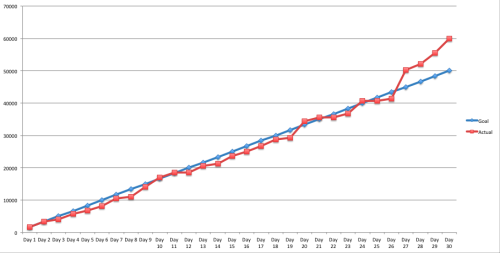
It has come to my attention that I never actually blogged here about NaNoWriMo this year, though I did participate and blog elsewhere. I thought I'd give a quick summary of the experience this year, as it is my best to date.
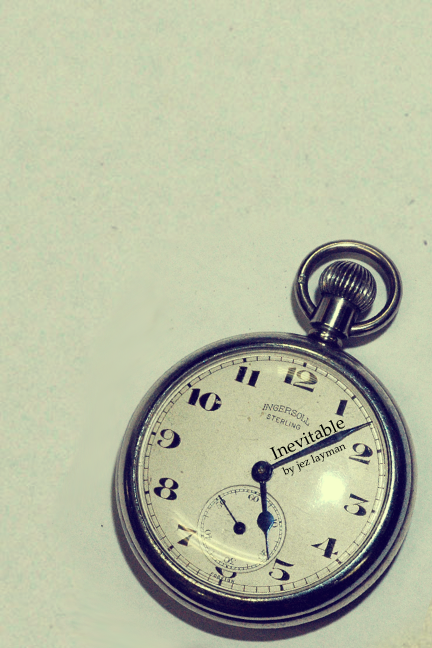
My novel this year is called Inevitable, though you've likely seen my refer to it as "The Time WIP" here. I scrapped what I had originally written and revamped the whole project and was rewarded with a fairly good starting point.
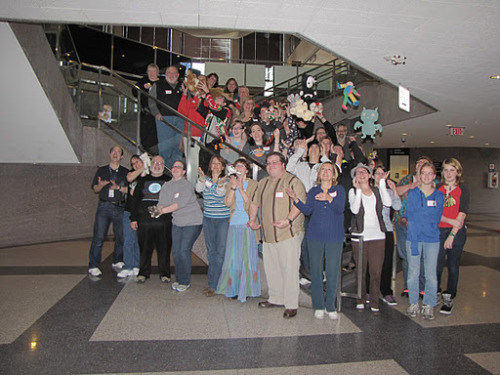
My success with reaching 50,000 words, and even more so with reaching 60,000 words, is in no small part due to the wonderful writing community of the Naperville NaNoWriMo chapter (or NaperWrimos). I attended two write-ins this year and was able to write 5k and 9k on those days respectively, thanks to the friendly and competitive nature of the meetings. Tim was a great help by encouraging me with additional challenges, promising me plot critters as prizes. At the end, I was rewarded with a great time at the TGIO Party, as well as a 60k start on a novel.
Afterwards, the NaperWrimo community proved to be even more helpful, by encouraging me to keep writing and work towards finishing my first draft. The forums are still alive, as is the community. Last week I met David, Katherine, and Carly at Caribou and had some fun with some editing and reading exercises. David has set me a goal of writing 2 more chapters (or 8,000 words) by our next meeting on the 26th. I'm already benefitting from having a deadline and accountability, but I also enjoy having writing friends to talk to, learn from, and share stories with, especially in person.
I'm still writing and, unfortunately, this means a lot more research. But I shall persevere!
P.S., if anyone knows of any good documentaries on the Battle of Gettysburg, drop me a line.

My novel this year is called Inevitable, though you've likely seen my refer to it as "The Time WIP" here. I scrapped what I had originally written and revamped the whole project and was rewarded with a fairly good starting point.
The main reason I was so successful with NaNoWriMo this year (I won with 60,013 words) is that I love the characters and even more than that, I love the world I created. I had fun with the idea of the Collective—a future version of our world where many superpowers have joined to create one massive empire—and the way I portrayed time travel in this novel. Time travel alone provided me a lot of room for experimentation and imagination. If all goes well, I will continue the themes in this book and write a three-book series of novels surrounding Jonah, Kevin, and the Historians. Additionally, I also want to write a fourth spin-off novel about Rosie Davis, my 1920s correspondent.Jonah McCameron has known since he was twelve years old that he would become a Historian someday, because he was told so. Ten years later, Jonah meets the stern, yet slightly mad Dr. Miles, a professor and Historian, who soon becomes Jonah's mentor. With the help of Dr. Miles, Jonah learns the truth about the Collective Historical Society: that the men and women who make up its body do not simply research history, but experience it first-hand, with the aid of time travel. As an Apprentice Historian, Jonah learns the tricks of the trade, but is soon plagued by questions regarding fate and free will, with no thanks to the mysterious Kevin Doyle. In this novel, Jonah will relive the past, work to change the future, and learn why foreknowledge is so dangerous.
My success with reaching 50,000 words, and even more so with reaching 60,000 words, is in no small part due to the wonderful writing community of the Naperville NaNoWriMo chapter (or NaperWrimos). I attended two write-ins this year and was able to write 5k and 9k on those days respectively, thanks to the friendly and competitive nature of the meetings. Tim was a great help by encouraging me with additional challenges, promising me plot critters as prizes. At the end, I was rewarded with a great time at the TGIO Party, as well as a 60k start on a novel.
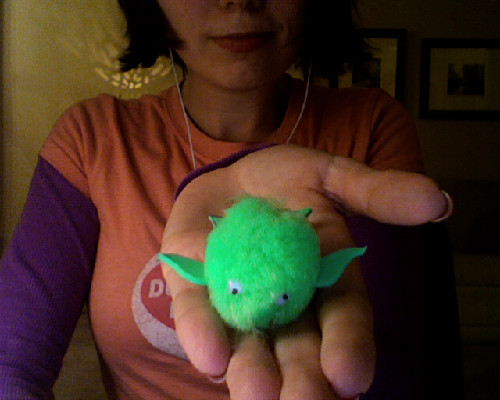
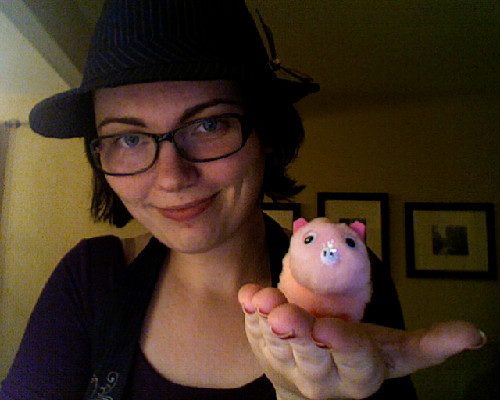
Afterwards, the NaperWrimo community proved to be even more helpful, by encouraging me to keep writing and work towards finishing my first draft. The forums are still alive, as is the community. Last week I met David, Katherine, and Carly at Caribou and had some fun with some editing and reading exercises. David has set me a goal of writing 2 more chapters (or 8,000 words) by our next meeting on the 26th. I'm already benefitting from having a deadline and accountability, but I also enjoy having writing friends to talk to, learn from, and share stories with, especially in person.
I'm still writing and, unfortunately, this means a lot more research. But I shall persevere!
P.S., if anyone knows of any good documentaries on the Battle of Gettysburg, drop me a line.
Friday, November 26, 2010
Draft 3, here I come!
November 2009, I sat down at my computer thinking "Okay, I can do this: I can write a novel." As the months wore on, I started to question the validity of that statement. Could I really write a full novel? I knew I could start one, I'd done that dozens of times before, but could I actually finish one? Most days, I wasn't so sure, but I kept at it anyway. Then in February 2010, I did it: I finished...the first draft.
Then a few months later, the second. In July, I sent out copies of my manuscript to a few willing participants who had promised me feedback. One of them responded with notes on the entire novel, another on the first twelve chapters, still another on the first chapter (though, to be fair, this was all she had received).
And now, in November of 2010, a little over a year after I first began this project, I am beginning work on the third draft of Zenith.
I once compared rewriting to surgery:
Then a few months later, the second. In July, I sent out copies of my manuscript to a few willing participants who had promised me feedback. One of them responded with notes on the entire novel, another on the first twelve chapters, still another on the first chapter (though, to be fair, this was all she had received).
And now, in November of 2010, a little over a year after I first began this project, I am beginning work on the third draft of Zenith.
I once compared rewriting to surgery:
For years I have heard authors toss around this phrase, that all writing is rewriting. I want to tell them they've got it backwards, that all rewriting is writing. You have a fully formed first draft and suddenly, you are starting from scratch. There is no such thing as a minor edit at this point, this is not plastic surgery. This is orthopedics, the breaking and reforming and placement of bones, the bare skeleton of what you wish to create. This is heart surgery and brain surgery, this is fixing the insides of a story so that it can live and breathe and speak on its own someday. You recreate the story, instead of making it look better. You rewrite it. Re-write. Write again. You essentially write a second novel, by fixing up that first draft.I stand by everything I said then and I am happy to say that my patient is out of the woods and stable these days. No more trauma surgery, no more heart or brain surgery. I now get to move on to the less threatening issues. I can focus on the lacerations and bruises, make sure everything is okay and stable. I get to comb my novel for inconsistencies, make sure my characters and my story get across well enough, and destroy all evidence of typos and grammar faux-pas. This is plastic surgery, the surface reformations and beautification stage. I hope it comes out pretty enough, in the end.
Sunday, August 29, 2010
The Writer's Journey
So, after my post earlier this evening, I realized I never actually posted the narrative to which many of my posts refer. This is something I wrote for my English 321 course last Spring, something I hope fellow writers will relate to and enjoy (especially if you like hyperbole).
The Journey: An Autobiography of a Writer
Not many walk this road, and fewer still reach their destination, the majority turning back before the journey is through. Warning signs line the start of the trail and even the most experienced of travelers, though they remind you to follow your dreams, discourage the trip unless you are absolutely positive it's what you want to do. It takes a certain kind of person to take that chance, to try their hand at writing, and not everyone succeeds. Writing requires you to walk into the forest without a map and little direction, with only your heart, your imagination, and a stubborn will to guide you. It's an adventure, a journey, a quest.
Many people first begin to explore the area when they are young, making up stories to amuse themselves or others. Some quickly grow out of it, convinced that fiction and fairy tales are juvenile, but the rest of us stick with it, some for love of the craft, some for the challenge, and some of us just don't know anything else. When I started writing, none of these applied. Learning the basics caused me stress, less equipped than all the others, and carrying the weight of dyslexia like manacles around my ankles, making the first steps almost impossible to take. I expended extra efforts to keep up with my classmates, but writing remained a challenge for years to come. Still, I kept at it, and at age thirteen I realized that all those years dragging the chained ball behind me and strengthened my legs, strengthened my skills. I discovered that my limits could not hold me back, not when I possessed a gift and a desire for writing.
I ran into that forest, ignoring the caution signs and rushed head-first into a novel without stopping to learn the territory. Treacherous traps awaited at every turn, walls sprang up so suddenly I had no choice but to run into them, and writing proved to be dangerous indeed. I look back on those first drafts now, the footsteps behind me on this trail, and I find typos, grammar mistakes, confusion, plot twists that lead into black holes, and characters without purpose or depth, but somewhere beneath all of that, calling out to me like a siren, is a small nougat of talent, a kernel of hope. That first novel, fated to stay in the dark forest forever, provided me practice, helped me learn the way of the land. I could identify dangers sooner, learn to deal with common mishaps, and live in that world. I decided to make my home there, to become a writer like the heroes I so admired, but I knew it wouldn't be easy.
Once I promised myself this life, I knew I had to take more precautions and turn my unguided wanderings into a quest. I enrolled in classes on writing and gained a set of directions and a map, instructing me where to begin and who to speak to. I found my teachers in the forest and they handed me lists of tasks, telling me I'd receive my reward at the end. Much to my surprise, these were not payments, but talents I would develop and knowledge I would gain. I learned the many different types and styles of sentences and paragraphs, discovered ways to identify and tame them, and the creatures, elusive and unattainable before, became my tools to tackle the terrors of the forest.
The first task following these on my quest was a narrative, something I thought I knew. The beasts I befriended previously were nothing compared to this dragon, a challenge for me to overcome. Like the Red Crosse Knight, a creation of this place from long ago, I fought this dragon three times before I prevailed, though I did not share in the knight's luck with the well, and sustained many scratches and scars from my battle. My first experience on the quest might have scared another off, but not me. I continued completing the tasks given to me and learned all that I could, so that on my next encounter with a narrative, I was prepared. The second time, I succeeded, learning to use my newly acquired tools and my old talent to my advantage.
Even though I survived these following missions, I still felt clumsy in the forest, taking so many precautions that I discovered very little about myself or my craft. I realized that in order to succeed in this realm, one has to remember the chance they first took when they walked past the warning signs and into the dense thicket. Writing requires risk, so risks I began to take. I explored the darker parts of myself that I once thought I could not or should not approach and put them down on the page. I exercised my ghosts, revealed my deepest fears, and through them grew into a stronger, braver writer. Once the words escaped me, pent up inside my body for so long, I felt relieved, light. The challenges of this mythical world existed not just around me, but within me, from the place in my heart from which words poured. I had learned how to tame the words, but they were nothing without depth and purpose, so I began to create new pieces, infusing a piece of my soul into each one, letting them take on a life of their own.
Those writings became narratives unlike the dragons I had fought, but creatures that reflected the trials I had endured, mirrors to remind me where I had been. More importantly, though they revealed my hidden pain to the world, these creations proved to me that I could survive in this land, that I could use magic like my masters, conjuring and summoning the words that could create, the words I would survive by. I did not start out at a young age as an apprentice; I was not bred for this role. I became the stories I wanted to write: the innocent, unassuming child, struggling in life, who overcame the obstacles and achieved her dream. With a long road still ahead of me, and a million predicaments and beasts waiting to try and stop me, I make my way through this forest on my journey, finally calling myself a writer.
The Monsters of Writing
We as writers risk our lives every day, trying to give the public what they want. We are like gladiators, facing terrible monsters and opponents all for the sake of entertaining others. Writers are no strangers to fear and frustration, believe you me.
The Biggest Monsters You Will Be Asked to Face as a Writer
The Biggest Monsters You Will Be Asked to Face as a Writer
- Research - after coming up with an idea and forming a rough plot, you might be asked to face Research, one of the biggest monsters of the Writing World and one that will pop up again and again. You cannot ever truly defeat this beast, it is immortal. When you face this creature, keep that in mind; you are not fighting to kill, you are fighting to survive. Still, facing Research is essential in your quest as a writer and each time you face it, you will grow stronger, gain knowledge, and be able to face your novel with more courage and confidence than ever before.
- Doubt - This is another creature that will spring up time and time again, generally when you least want it to. It's always hard to beat and afterwards your confidence is shaken and you constantly question your ability to complete your Journey. Doubt generally coincides with other challenges, such as The Wall and The Unmarked Path. Sometimes the best defense against this monster is to simply ignore it. Embrace that 5-year-old mentality that if you don't acknowledge its existence, it can't truly exist.
- Revision - This beast often attacks at the same time as Doubt on the second leg of your Journey to Publication. You've acquired your basic skills and materials and you've finished the first draft of your Novel, but now it's time to revise. Don't be afraid to really fight this monster, cutting out words, sentences, chapters, and limbs. Don't hold back, because if you do, you'll only have to face it again later. Each time you face this dreadful foe, it's harder and harder to put up a fight, as it wears you down. You thought you were done and Revision rears its ugly head to remind you that you aren't. It's like starting over, but it is survivable.
- Querying - This is the true test of your strength and skills. Your Novel has to be the Best in Show, able to blow away any obstacles and impress the judges like no one ever has before. This is not quite the final battle in your Journey, but it is the turning point. Every foe you've faced up until now has been in preparation for this terrifying beast. Luckily, there are many guides that can help you train for such a match scattered about on the internet. I urge you to study them before you charge into battle.
That said, know that I am facing the first Monster on this list with my next project, as I've defeated the somewhat lesser foe of Lack of Inspiration, a close cousin to Doubt.
If you have any other Monsters you feel should be included in this Survival Guide, or any additional notes on how to defeat the ones above, please leave them in the comments.
Saturday, August 21, 2010
Querying The Damsel
Well, I did it: I just sent off query letters to four different agents, so cross your fingers for me! I'll keep you updated as I hear news, of course. Since many of you are in the same boat as I, looking for an agent or hoping to someday be published, I thought I might leave you a few tips on querying.
General Rules for Querying
General Rules for Querying
- Research First. Find out about the agent, what they represent, where their tastes lie, and if they are currently accepting queries. You can find an agent via a search engine like AgentQuery, or by querying the agents of works similar (but not too similar!) to yours.
- Follow the Guidelines. Now, there's no hard and fast rule here and this goes hand in hand with the above rule, but please make sure you have read the guidelines specific to the agent you are querying. Some want specific fonts, some want only the query, some want sample pages; it all depends on the agent.
- Keep it Professional. Publishing is a business, so treat it as such. Use formal block formatting in your query email or letter and treat the agent with respect. These agents are not your high school buddies, so please don't write to them as if they were.
- Personalize Your Query. An agent can tell if you've written one query and sent it out to fifty people at once. Personalize your query to fit the agent, appeal to their tastes and add any information you feel is important that you've learned about them through your research.
- Proofread Your Query. This may seem like a no-brainer, but do you really want to take that chance? Edit your query just as you would edit your novel to make sure it flows well, makes sense, and is free of those pesky typos. Additionally, have a friend/teacher/writing buddy read over your query as well.
Thursday, July 15, 2010
Rags to Riches: Where's My Dénouement?
I don't always post my writings here, but here's a short narrative I came up with earlier, in lieu of my recently crushing financial problems.
Rags to Riches, by Jez Layman
Whoever penned my story got it wrong. I was supposed to be rags to riches. I spent my first years in the trailer park, only they called it a mobile home community; it sounded nicer. Now we have a house. It's lovely, if you don't get too close. Just stay on the street, never mind the cracked siding and peeling paint, stay away from the faded door, the messy hallways and imperfections. Inside we've tried to make it look nice, but it's nothing compared to you and your house. I'm sorry, we did the best we could, really. But look at it from the street, from far off, it's smart, it's quaint. It's our dream. It's not much, but it's a house, that's all we wanted and maybe it's not perfect, but it's ours.
A house meant we were moving up, out of the trailer park and on with our lives, but, it didn't, not really. My story got messed up somewhere along the way. Someone put in one too many conflicts and added catastrophe instead of a dénouement. Things were supposed to get better, not worse. We were supposed to be able to live in the house, it was supposed to be pretty. The days were supposed to be filled with successes and happiness, not struggle and mountains of bills. I was supposed to escape everything when I left, when we got a house, but someone penned it wrong. Where's my rising action, where's my turning point? Where's my brilliant love story, my heroic adventure, my long-lost relative to leave behind a fortune? Where's my happy ending?
Rags to Riches, by Jez Layman
Whoever penned my story got it wrong. I was supposed to be rags to riches. I spent my first years in the trailer park, only they called it a mobile home community; it sounded nicer. Now we have a house. It's lovely, if you don't get too close. Just stay on the street, never mind the cracked siding and peeling paint, stay away from the faded door, the messy hallways and imperfections. Inside we've tried to make it look nice, but it's nothing compared to you and your house. I'm sorry, we did the best we could, really. But look at it from the street, from far off, it's smart, it's quaint. It's our dream. It's not much, but it's a house, that's all we wanted and maybe it's not perfect, but it's ours.
A house meant we were moving up, out of the trailer park and on with our lives, but, it didn't, not really. My story got messed up somewhere along the way. Someone put in one too many conflicts and added catastrophe instead of a dénouement. Things were supposed to get better, not worse. We were supposed to be able to live in the house, it was supposed to be pretty. The days were supposed to be filled with successes and happiness, not struggle and mountains of bills. I was supposed to escape everything when I left, when we got a house, but someone penned it wrong. Where's my rising action, where's my turning point? Where's my brilliant love story, my heroic adventure, my long-lost relative to leave behind a fortune? Where's my happy ending?
Subscribe to:
Posts (Atom)
